
DNR estimates wolf population has declined
2024-25 survey finds lower wolf numbers but researchers urge caution
REGIONAL—Minnesota’s gray wolf population has declined since its last peak estimate, with state wildlife managers estimating just under 2,300 wolves across the northern part of the state during …
This item is available in full to subscribers.
Attention subscribers
To continue reading, you will need to either log in to your subscriber account, below, or purchase a new subscription.
Please log in to continue |
DNR estimates wolf population has declined
2024-25 survey finds lower wolf numbers but researchers urge caution
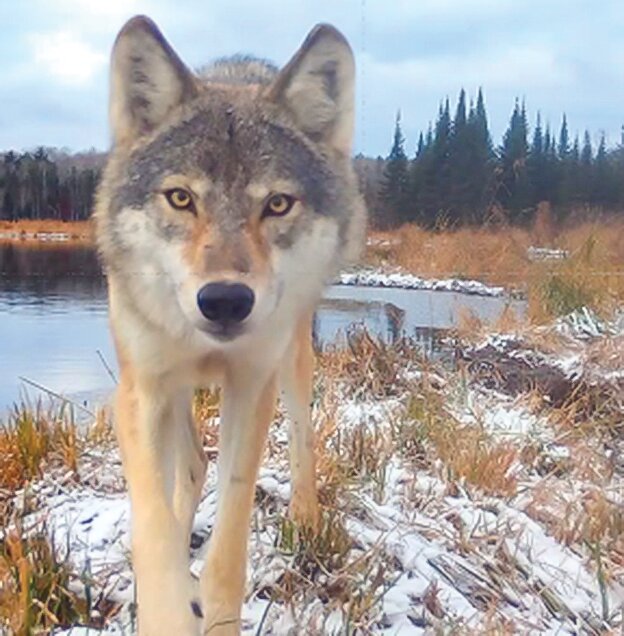
REGIONAL—Minnesota’s gray wolf population has declined since its last peak estimate, with state wildlife managers estimating just under 2,300 wolves across the northern part of the state during the winter of 2024-25. That’s according to a new report from the Minnesota Department of Natural Resources.
The point estimate, compiled by DNR researchers John Erb and Carolin Humpal, falls below the 2,919 wolves estimated during the winter of 2022-23, though the authors caution the decline may be partly an artifact of reduced survey effort and poor tracking conditions rather than a true population crash. The 90-percent confidence interval for the current estimate ranges from 1,862 to 2,670 wolves.
“The preponderance of evidence ... suggests wolf numbers have recently declined,” the report states, though the authors note the drop was likely not as steep as the raw numbers imply.
Minnesota has been home to wolves longer than almost anywhere else in the contiguous United States. When the federal government extended Endangered Species Act protections to wolves in the mid-1970s, the state held the only known reproducing wolf population in the lower 48 states outside of Isle Royale. The DNR has tracked the population with varying regularity since 1978.
While the overall number of wolves appears to have declined, that portion of the state considered to be “wolf range” continues to expand to the south and west, although the researchers acknowledge determining wolf range at the margins of the range can be subjective. Total wolf range, which includes areas where lone wolves or dispersing animals are detected, expanded six percent to 118,612 square kilometers, extending into parts of central Minnesota where multiple packs were documented this winter.
Not all of wolf range is necessarily occupied. Indeed, the new survey estimates pack-occupied wolf range at about 67,464 square kilometers, representing a nine percent decrease from the 2017-18 survey.
Researchers used data from 42 radio-collared wolf packs to derive territory and pack size. Average pack territory measured about 146 square kilometers, while average winter pack size came in at 4.21 wolves — figures broadly consistent with the past decade of monitoring.
Using those numbers, researchers calculated approximately 463 wolf packs statewide.
The survey relies on opportunistic observations from staff across more than a dozen partner agencies, including the U.S. Forest Service, tribal natural resources programs, Voyageurs National Park, and county land departments. Participants reported 947 wolf sign observations — tracks, visual sightings, scats, howls, and depredation sites — a 41 percent drop from the 2017-18 survey.
The researchers flagged that comparison as significant. In 2017-18, 192 individuals contributed observations; this past winter, only 92 did. Snow cover, which is essential for track surveys, was also below average, particularly in 2024, and the share of observations that were snow tracks fell to its lowest level since the surveys began.
“We strongly believe that a notable portion [of the apparent decline in pack-occupied range] is attributable to effort and opportunity reductions,” the report states.
An ongoing trail camera study underscores that concern. Cameras deployed in 32 townships near the edge of wolf range confirmed pack occupancy in 13 of them, while traditional opportunistic observations confirmed only four — suggesting that wolves in remote and private-land areas are routinely undercounted.
The report notes that about 30 percent of townships where pack detections occurred exceeded the road and human density thresholds the model uses to predict wolf occupancy, a figure that has crept up from 11 percent in 1989. Researchers said this indicates the decades-old habitat model increasingly underestimates where wolves actually live.
Wolves in the Great Lakes region were removed from federal endangered species protections in 2012, allowing a regulated public harvest in Minnesota from 2012 to 2014, during which between 238 and 413 wolves were killed annually. A federal court reinstated ESA protections in late 2014, and no public harvest has occurred since.
The DNR conducts its full wolf range reassessment roughly every five years. The last one was in 2017-18, making the current survey the first comprehensive range update in seven years. Annual population estimates relying on previously mapped range are conducted in the intervening years.
Researchers said future surveys may incorporate updated habitat selection models and expanded trail camera networks to improve the accuracy of pack-occupied range estimates, which drive the overall population calculation.


