
Interpretive signs at Voyageurs targeted for federal review
Dam impacts on Ojibwe history deemed unacceptable
REGIONAL — Voyageurs National Park has been swept into a nationwide effort by the Trump administration to revise interpretive materials at national parks, including two signs now under federal …
This item is available in full to subscribers.
Attention subscribers
To continue reading, you will need to either log in to your subscriber account, below, or purchase a new subscription.
Please log in to continue |
Interpretive signs at Voyageurs targeted for federal review
Dam impacts on Ojibwe history deemed unacceptable
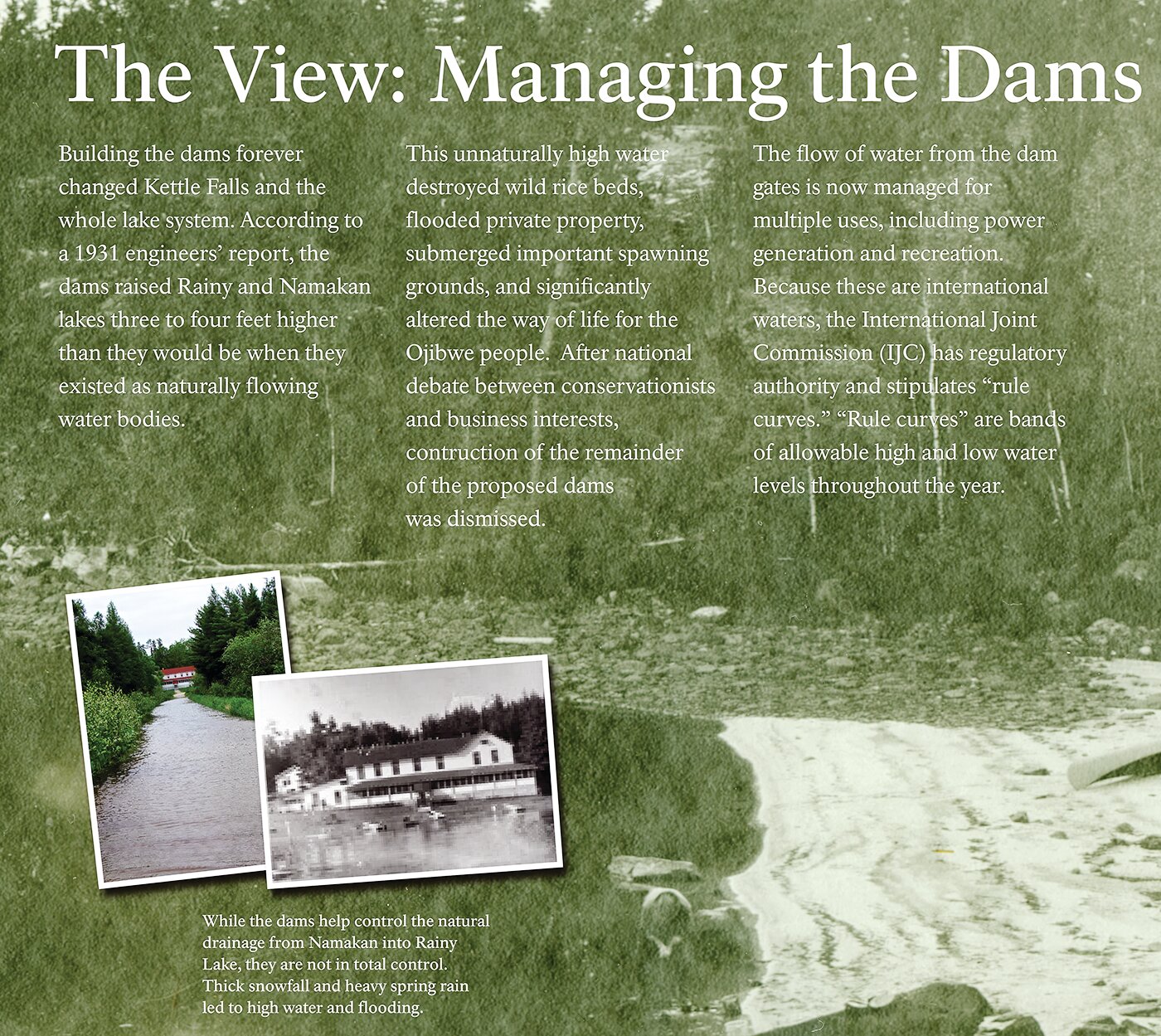
REGIONAL — Voyageurs National Park has been swept into a nationwide effort by the Trump administration to revise interpretive materials at national parks, including two signs now under federal review, the most significant of which addresses the impact of dam construction on Ojibwe communities and the destruction of traditional wild rice beds.
The Voyageurs wayside exhibit describes how altered water levels flooded historic shorelines and destroyed wild rice areas central to Ojibwe culture, subsistence, and treaty rights. That language appears in a National Park Service review spreadsheet compiled under the executive order titled “Restoring Truth and Sanity to American History.”
According to the spreadsheet entries, the Voyageurs signs under review were created, reviewed, and installed through established interpretive processes and were determined at the time to be relevant and appropriate. Park interpretive staff have not recommended changes.
The scrutiny of Ojibwe history at Voyageurs reflects a much broader federal effort, under the president’s executive order, to reframe how Indigenous history is presented across the national park system.
The spreadsheet includes 101 submissions that explicitly reference Native American tribes, forced removals, or related Indigenous history across more than 50 national park sites. Those entries include references to massacres, boarding schools for Indigenous children, treaty violations and displacement of tribal communities.
Among the parks identified are some of the country’s most iconic, including the Grand Canyon. At that park, according to documents reviewed by The Washington Post, text stating that settlers “exploited land for mining and grazing” and that federal officials “pushed tribes off their land” to establish the park was removed or revised.
The scope of the federal review goes well beyond Indigenous history. Across the national park system, materials and entire exhibits addressing slavery, civil rights history, climate change, air pollution and sea level rise have been removed or slated for revision. At Glacier National Park, signage explaining that human-caused climate change is contributing to glacier retreat was ordered removed or changed.
The review has also reached less consequential material. At Voyageurs, a second sign titled “A Mile in Their Shoes: Lumberjacks” was flagged over language stating that “aghast townspeople might refer to these men as ‘timber beasts,’ but not to their faces,” which the spreadsheet describes as “disparaging the cleanliness of lumberjacks.”
In response to questions, a spokesperson for the Department of the Interior said the agency is implementing the president’s executive order directing agencies to review interpretive materials for “accuracy, honesty, and alignment with shared national values.”
The department said park staff were asked to identify materials that “might warrant clarification,” and that elevating an item for consideration “does not mean it violates the Order, and it does not mean it will be changed.” The statement added that “in the vast majority of cases across the system, flagged materials remain unchanged.”
“To date, no signs have been removed at Voyageurs National Park as a result of the review process,” the statement said.
Katherine Severson, program manager for Interpretation, Education, and Partnerships at Voyageurs National Park, confirmed the current status of the review.
“I can confirm what was provided by the Department of the Interior: No signs have been changed or removed at Voyageurs National Park. The implementation of the order and the associated review process are ongoing,” Severson said.
The broader review effort is now the subject of a federal lawsuit filed in Massachusetts by a coalition of preservation, scientific and historical organizations, including the National Parks Conservation Association, the Association of National Park Rangers, and the Union of Concerned Scientists. The coalition argues that the Interior Department, in implementing President Donald Trump’s executive order, has unlawfully censored factual information at national park sites.
“Censoring science and erasing America’s history at national parks are direct threats to everything these amazing places, and our country, stand for,” said Alan Spears, senior director of cultural resources for the National Parks Conservation Association.
The executive order directs federal agencies to eliminate content that “disparage Americans past or living (including persons living in colonial times)” or that emphasize matters unrelated to the “beauty, abundance, or grandeur” of natural features.
Interior Department officials have defended the review process. In a statement provided to The Washington Post, the department said, “All federal agencies are to review interpretive materials to ensure accuracy, honesty, and alignment with shared national values.” The statement added that the National Park Service is taking action “in accordance with the Order.”
The lawsuit contends that the directive is being implemented in violation of longstanding legal standards governing how national parks are managed. Under the National Park Service Centennial Act, the agency is required to “ensure that management of System units and related areas is enhanced by the availability and use of a broad program of the highest quality interpretation and education.”
Plaintiffs argue that removing or altering interpretive materials without similar scholarly review undermines that mandate.
“To deprive visitors of those stories, even those we should no longer be proud of, and to give them incomplete information is unthinkable,” said Bill Wade, executive director of the Association of National Park Rangers.
The plaintiffs are seeking a court order to halt further removals and restore materials that have already been taken down. A federal judge in Pennsylvania recently ordered the restoration of displays discussing slavery at a Philadelphia site, comparing the removals to the government control depicted in George Orwell’s “1984.”
At Voyageurs, the outcome will determine whether long-standing interpretive accounts of Ojibwe history and environmental change remain on public display.
Note: Anonymous Department of the Interior employees posted the National Park Service review database online Monday, accompanied by a statement reading, “This data belongs to the American people, who need to know what is being done in their name. Donald Trump, Russell Vought, Doug Burgum, and the rest of this corrupt administration are trying to use your public lands to erase history and undermine science.”
The database, which includes a spreadsheet and supporting exhibits, was first reviewed, authenticated and reported on by The Washington Post. The spreadsheet contained information primarily related to signage. Gift shop materials, including books, were also listed for review, though the gift shop summary for Voyageurs was not included in the posted documents.


