
The secret lives of garter snakes offer surprises
If you’ve spent any time poking around woodpiles, garden edges, or sunny rock piles in here in the North Country, you’ve probably met a garter snake. These small, striped reptiles are the most …
This item is available in full to subscribers.
Attention subscribers
To continue reading, you will need to either log in to your subscriber account, below, or purchase a new subscription.
Please log in to continue |
The secret lives of garter snakes offer surprises
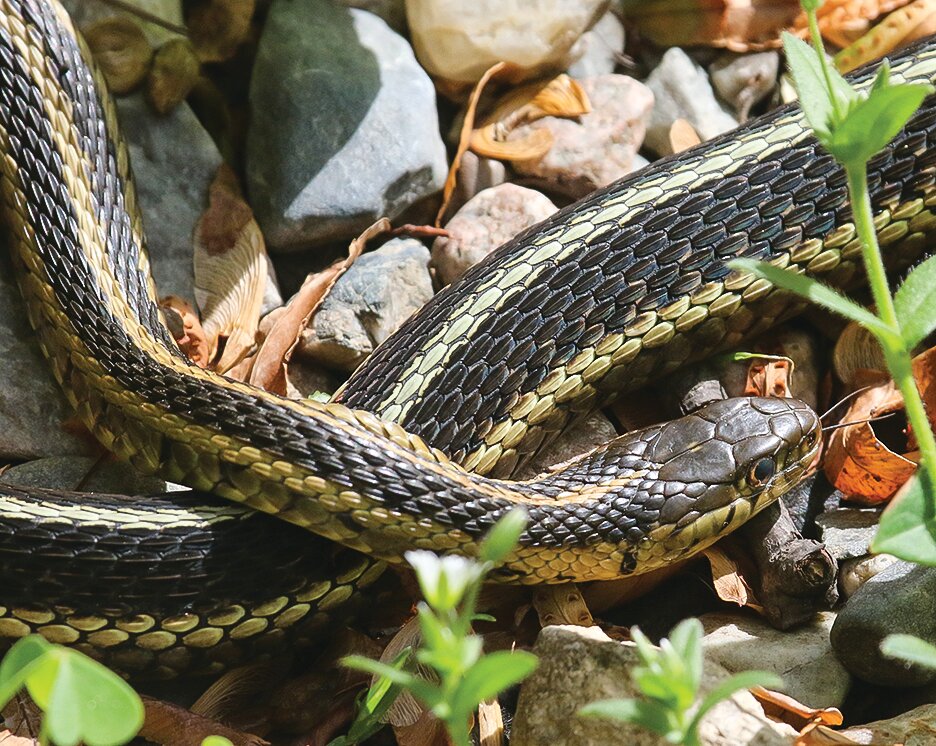


If you’ve spent any time poking around woodpiles, garden edges, or sunny rock piles in here in the North Country, you’ve probably met a garter snake. These small, striped reptiles are the most common snake in our region, and despite their modest size, they’re full of surprises.
Among them is the fact that they give birth to live young. Most of us probably picture snakes laying eggs (which most do), but garter snakes do something different. They’re known as “ovoviviparous,” meaning the eggs develop and hatch inside the mother’s body, and she gives birth to fully formed, wriggling baby snakes rather than depositing eggs in a nest. A single garter snake can give birth to a litter ranging from a handful up to 20 or more babies, depending on her size and condition.
This live-birth strategy is a great adaptation for a cold-climate reptile. Minnesota’s growing season is short, and eggs left in the ground could be slow to develop since soil temperatures often remain quite cool in our region. By carrying her developing young inside her body, a mother garter snake can seek out warm, sunny spots to bask, effectively regulating the incubation temperature herself and speeding development of her young. The baby snakes emerge ready to fend for themselves immediately, with no parental care to follow. They’re on their own from minute one, hunting tiny insects and worms while trying to avoid any of a long list of predators and grow large enough to make it through their first winter.
Beating the deep freeze
Speaking of winter, we all know they can be tough here in the North Country, which can create real challenges for a cold-blooded animal. Those that do survive here have developed their own strategies for survival. Most, like frogs and turtles, resort to hibernation, often burying themselves in underwater sediments just before shutting down. The wood frog just crawls under forest litter and allows itself to freeze solid, only to wake up when spring returns.
Garter snakes spend the winter underground, typically in large gatherings of snakes. In fall, garter snakes seek out their hibernaculum, a frost-free retreat such as an old rodent burrow, a crack in bedrock, a rotting stump, or the foundation of a building. There, they enter torpor, where their metabolism slows dramatically and they wait out the cold months in a kind of suspended animation.
What makes this especially fascinating is that garter snakes are famously social when it comes to hibernation. Suitable winter dens are rare, so snakes from a wide area often funnel into the same spot, sometimes by the dozens or even hundreds. In parts of Canada, mass garter snake emergences from communal dens are a famous spring spectacle, with snakes pouring out of the ground in writhing masses once the weather warms. We have some similar emergences here in northeastern Minnesota as well.
Do snakes have friends?
Here’s where things get genuinely strange. For a long time, snakes were assumed to be solitary creatures with no real social structure. But recent research on garter snakes has started to chip away at that idea. Studies have found that garter snakes show consistent individual preferences for the company of certain other snakes, choosing to spend time near particular individuals repeatedly rather than associating randomly. While you can’t tell from the accompanying photographs here, they show two different garter snakes that like to sun themselves in the mornings from the patio on the east side of our house. The two snakes do seem to like to hang out together, often slithering along each other, maintaining some degree of contact, often for long periods.
Research has shown that some snakes turn out to be more “social” than others, consistently seeking out group company, while some prefer to keep more to themselves—differences that look a lot like personality types. It’s in keeping with the trend we’ve seen in so much animal research: animals are so much more complex and intelligent in their own ways than we give them credit for.
Which is why they deserve our respect. Garter snakes are a quiet but important part of the northern Minnesota ecosystem. As predators, they help keep populations of slugs and small rodents in check, while also eating insects, and small amphibians. As prey, they’re an important food source for hawks, herons, raccoons, foxes, and other predators. They sit right in the middle of the food web, moving energy from small invertebrates up to larger animals. A yard or woodland with healthy garter snake populations is generally a sign of a healthy, balanced habitat.
The bite (and the smell)
If you do pick one up, a garter snake might strike in self-defense, especially if it feels cornered. But there’s little to fear. Garter snakes have small, rear-facing teeth designed for gripping slippery prey like worms and frogs, not for tearing into anything larger. A bite from a garter snake is unlikely to even break human skin, and at most might leave a faint scratch.
What garter snakes lack in bite force, they more than make up for with a different defense: a foul-smelling musk secreted from glands near the base of the tail. When handled or frightened, a garter snake will often release this pungent substance, sometimes combined with a bit of fecal matter for extra emphasis. It’s not dangerous, but it is memorable, and it can cling to skin and clothing for a surprisingly long time. Most people who’ve handled a garter snake learn this lesson exactly once.
So next time you spot one sunning itself on a warm rock, give it a respectful nod. It survived a brutal winter, may have just given birth to a dozen babies, possibly has snake buddies it likes to den with, and is quietly doing important ecological work. Just maybe don’t pick it up unless you’re prepared for the consequences.


