
The upside-down warbler
The black-and-white warbler is a noisy, summer denizen of the North Country woods
ne of our most common warblers is just another great example of how this colorful family of birds has filled such a wide range of niches in the forests of the North Country.
Some warblers feed at …
This item is available in full to subscribers.
Attention subscribers
To continue reading, you will need to either log in to your subscriber account, below, or purchase a new subscription.
Please log in to continue |
The upside-down warbler
The black-and-white warbler is a noisy, summer denizen of the North Country woods

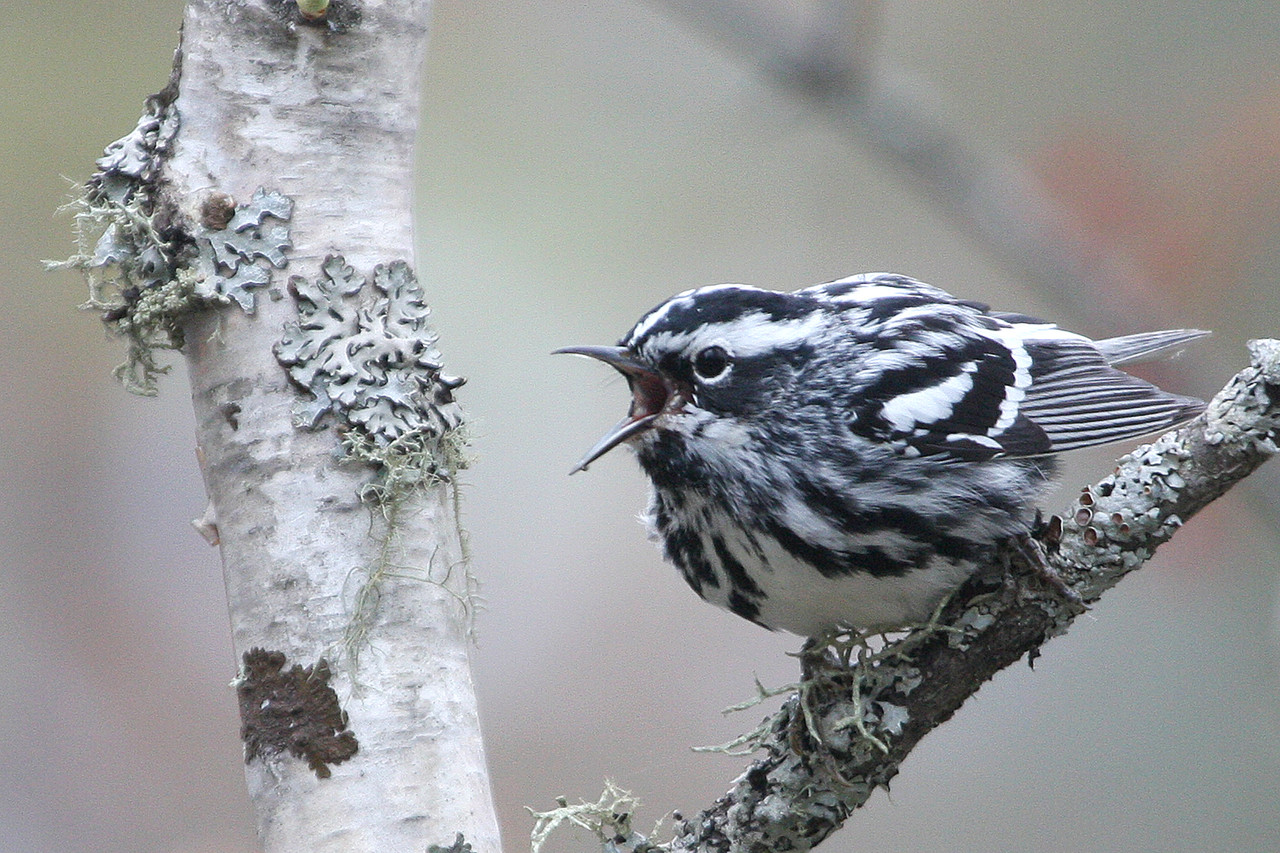


ne of our most common warblers is just another great example of how this colorful family of birds has filled such a wide range of niches in the forests of the North Country.
Some warblers feed at the tips of high branches, others feed closer to the trunk. Some feed in the understory, and still others feed mostly on the ground or in low shrubs. The black-and-white warbler is unique in that it gleans insects mostly from the bark of tree trunks, often working its way up and down trunks, much in the habit of a nuthatch. While nuthatches are often called “upside-down birds” because of their habit of moving head first down tree trunks as they search crevices in bark for food, the black-and-white probably qualifies as the “upside-down warbler” because of its similar feeding method. It has an unusually long hind toe and claw on both feet that enable it to cling to bark, particularly when upside down.
They’ve been back in our area for over two weeks now, and their insistent, high-pitched “weet’see, weet’see, weet’see” call can be heard regularly throughout the region. They tend to prefer more deciduous woods, so in our area listen and look for them in forests dominated by fairly mature aspen, birch, or red maple. They’re also often found in mixed woods, as long as there is some deciduous component.
This is a fairly aggressive warbler, and they usually respond quickly if you play their song when one is nearby. And yes, there is an app for that, so you can now play bird calls on smart phones, i-Pods, or similar devices. I use an external speaker on my iPod that’s about the size of a golf ball, so it’s easy to throw in my pocket if I’m heading out to watch or photograph birds. Don’t overuse the calls, however, especially with breeding birds, because it can stress them out. I usually limit use to two or three minutes and then I move to another area, or call up a different species.
Like the nearly two dozen other species of warblers that have returned to our area the past few weeks, the black-and-white is here to take advantage of our annual early summer explosion of insect life, which allows them to raise a couple large broods of young in a good year. Like a few other warblers, the black-and-white is most often a ground nester, preparing a small, finely-woven, cup-shaped nest, usually set near the base of a tree. But good luck finding one. Warblers are usually really good at hiding their nests from predators. And, in their minds, that includes you…
Keywords
black-and-white warbler


