Secretary of State weighs in on SAVE Act
REGIONAL — Should tens of thousands of Minnesota citizens be denied the right to vote over concerns that even a handful of non-citizens might attempt to vote in an upcoming election? As Secretary …
This item is available in full to subscribers.
Attention subscribers
To continue reading, you will need to either log in to your subscriber account, below, or purchase a new subscription.
Please log in to continue |
Secretary of State weighs in on SAVE Act
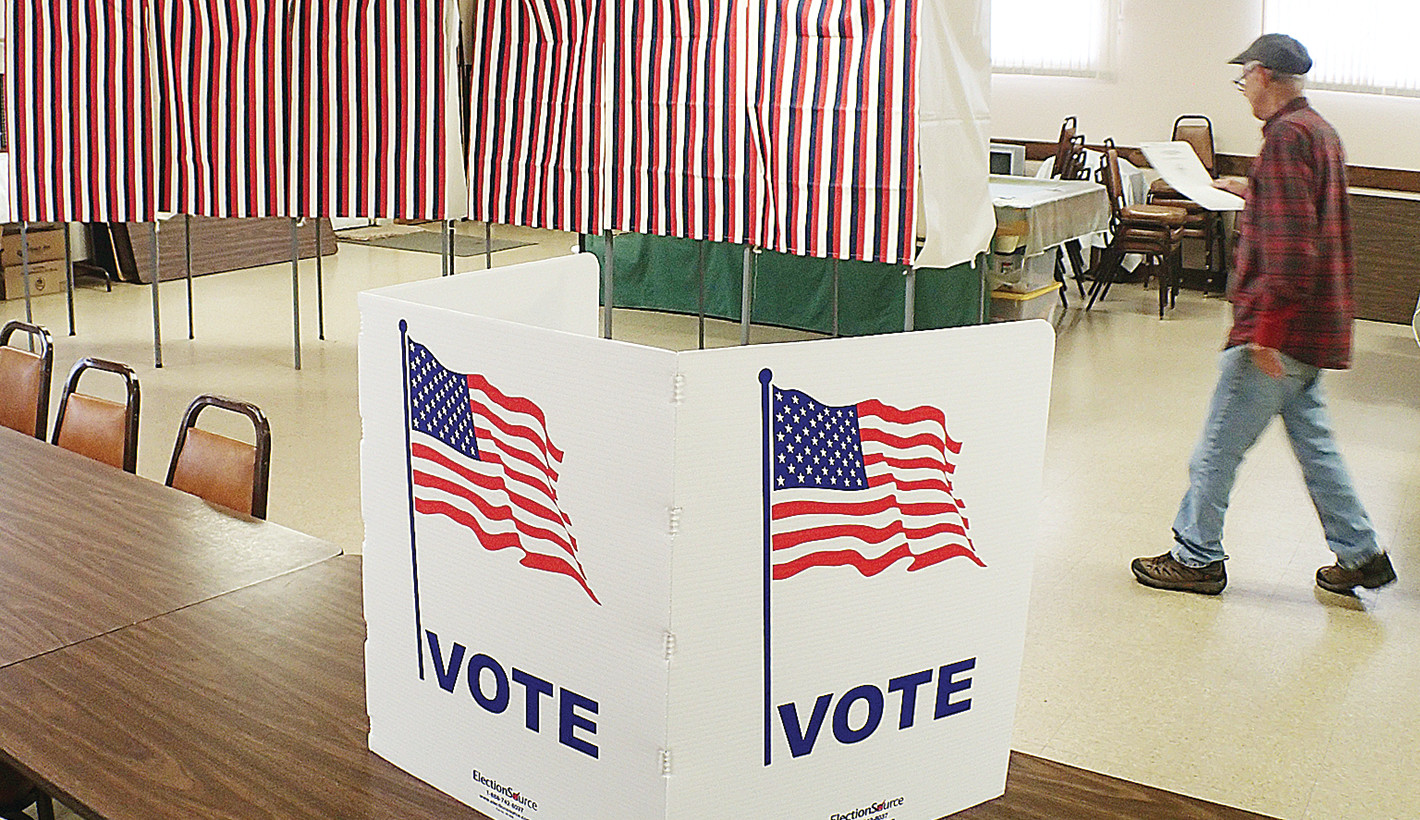
REGIONAL — Should tens of thousands of Minnesota citizens be denied the right to vote over concerns that even a handful of non-citizens might attempt to vote in an upcoming election?
As Secretary of State Steve Simon sees it, that’s the fundamental question at the heart of the current debate in Washington over the so-called SAVE Act, a measure pushed by President Donald Trump that would disenfranchise millions of American citizens from their right to vote. Simon recently spoke to the Timberjay on his concerns over the proposal, which is currently being debated in the U.S Senate.
While the measure is presented by supporters as a voter ID bill, Simon said it is far more restrictive than simply presenting photo identification at the time of voting, which is how voter ID bills usually operate.
While voter ID laws, which have been enacted in many states, have a mixed track record in terms of their impact on voter turnout, in many cases the impact has been relatively small.
But the SAVE Act goes well beyond those usual requirements, and mandates that anyone registering to vote present absolute proof of citizenship, such as an official birth certificate or a U.S. passport.
“I understand that someone might hear that and think that’s a good thing. What’s the big deal,” said Simon. “But when you think about it, the more you see, the worse it looks.”
Simon notes that 69 million women in the U.S. have changed their names, usually as a result of marriage, and that would require them to not only produce a birth certificate but also a marriage certificate. In most cases, a driver’s license won’t suffice as proof of citizenship, since only the enhanced version, which is not the same as a Real ID, provides such proof.
“What if you’re one of the tens of millions of women who don’t have these records?” asked Simon, who said we don’t have to guess about the consequences. “The state of Kansas tried this approach. They passed their own version of the SAVE Act a few years ago and a federal judge recently struck down the law after 31,000 eligible Kansans were shut out of voting because they couldn’t come up with the paperwork. That’s not a rounding error.”
With nearly twice the population of Kansas, Simon said the SAVE Act would very like disenfranchise many more than 31,000 eligible voters in Minnesota.
“That’s why we need to think about these things,” he said.
No evidence of non-citizen voting
The rationale for the changes the SAVE Act would mandate is preventing non-citizens from voting. While Simon said he agrees that voting should be limited to citizens, he said there’s virtually no evidence to suggest that isn’t already the case. He cited a 2024 study by University of St. Thomas professor Virgil Wiebe that found just three instances of documented non-citizen voting in Minnesota between 2015 and 2024. All three instances involved green card holders, who may have mistakenly believed they could legally vote. During the same period, Minnesota citizens cast more than 13 million ballots.
Wiebe noted that state and federal laws establish felony penalties and possible deportation for any non-citizen caught voting and suggested that those penalties significantly discourage non-citizens from voting. In his study, Wiebe poured through state and federal criminal prosecution records, other legal databases, voter registration audits by state agencies, studies by think tanks, press accounts, national crime databases, state crime reports, immigration records and reports, and jury duty registration processes, only to conclude there is “no evidence of systematic or widespread voter fraud by noncitizens, whether intentional or accidental.”
Federal demands
for information
The SAVE Act would also require that states hand over sensitive voter information to the Department of Homeland Security on a monthly basis to allow DHS to undertake voter purging.
“That’s a huge issue,” said Simon.
The Trump Justice Department has already tried to enforce this provision through an executive order, but 32 U.S. states, including Minnesota, are challenging that order in court. Minnesota’s challenge to the DOJ went before a judge in March with a decision expected within the next several weeks. So far, the DOJ has consistently lost in court in such cases.
While the Secretary of State’s office does make voter lists available to candidates and their campaigns, those records only include names and addresses, but do not include the sensitive information demanded by the Trump DOJ, including Social Security numbers and driver’s license information. Simon said he’s reviewed state laws on the matter and has concluded that complying with the DOJ’s order would be a violation of state law due to the sensitive nature of the information demanded.
Among the states that have cooperated with the DOJ, the results have again demonstrated the rarity of non-citizens even registering to vote, much less voting. According to FactCheck.org, the DHS has reviewed about 49 million voter registrations from those states that have complied and flagged about 10,000 registrations as suspect, according to a Trump spokesperson. Further review by election officials in those states found that some of those flagged registrations were from actual citizens, and many of the registrations that involved non-citizens appeared to be the result of clerical errors by election officials rather than suggesting intent by non-citizens to actually vote. But even if all 10,000 registrations were from non-citizens intending to vote, it would amount to 0.02 percent of all voter registrations examined across about 18 states.
SAVE Act designed
to sow chaos
for the midterms?
While the SAVE Act is presented as protecting U.S. elections, Simon fears passage of the law would sow chaos throughout the electoral system. Indeed, it appears that’s by design. Simon notes that the SAVE Act, unlike other laws that have required major changes in electoral processes, would take effect immediately upon signing. In the past, states have typically had a period of years to implement such changes to prevent disruptions close to major elections.
At the same time, the SAVE Act would, for the first time, impose criminal penalties on poll workers if they make mistakes or otherwise violate any provisions of the new law.
“It’s really messy, not well-thought-out legislation that could have real effects on loyal American voters on both sides of the aisle,” Simon said.
President Trump’s frequent comments on the bill, suggest it’s being pushed for partisan purposes, rather than good governance. Speaking to Republican lawmakers earlier this year, Trump said the SAVE Act “would guarantee the midterms” for Republicans.
“It’s hard not to include that he’s thinking about this very politically,” said Simon. “We shouldn’t be passing election laws based on who it helps or hurts. Unfortunately, things he says make it sound very partisan.”


