
Lawmakers consider digital privacy concerns
REGIONAL — You don’t have to be a suspect for your information to end up in a police file. If your phone connects to a nearby tower, if you search the wrong term online, or if your car …
This item is available in full to subscribers.
Attention subscribers
To continue reading, you will need to either log in to your subscriber account, below, or purchase a new subscription.
Please log in to continue |
Lawmakers consider digital privacy concerns
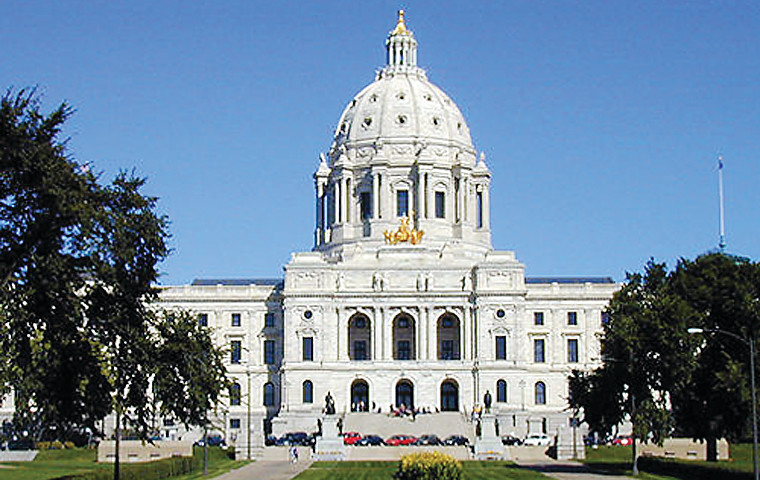
REGIONAL — You don’t have to be a suspect for your information to end up in a police file. If your phone connects to a nearby tower, if you search the wrong term online, or if your car passes a camera on a highway miles from home, that data can be pulled into digital dragnets that most Minnesotans have never heard of.
Those concerns took center stage during a two-hour hearing of the Legislative Commission on Data Practices last Thursday in St. Paul, where lawmakers heard how reverse warrants, geofence warrants, and automated license plate readers are reshaping police investigations in ways many residents don’t realize.
The discussion began with a tool most people have never encountered by name, but one that can capture their information without any action on their part. Reverse warrants, sometimes called backwards warrants, allow law enforcement to gather large pools of data before they have a suspect. Instead of identifying a person first, police work in reverse, sweeping up information from everyone in a certain digital category and narrowing it down later.
Imagine someone searching for “Lake Vermilion cabin fire” after seeing smoke in the distance. With a reverse keyword warrant, police investigating an unrelated arson in another county could ask Google for the names of everyone who searched for similar terms during a certain time window. That innocent searcher might suddenly land on a long list of possible matches, even though all they did was check if a neighbor’s property was safe.
The ACLU described the practice starkly. “Reverse warnings allow law enforcement to go on fishing expeditions, tracking people’s locations and surveilling large areas indiscriminately,” said John Boehler of the ACLU of Minnesota. He noted that police can also issue keyword-based requests, saying, “Police can compel tech companies to give up your records and restate on individuals who search for specific words or websites.”
For many Minnesotans, especially older residents who grew up with the assumption that privacy meant closed doors and unlisted numbers, the idea that a routine web search could insert them into a criminal investigation may feel like science fiction. Lawmakers acknowledged the concern, pointing to a recent federal court ruling that found geofence warrants unconstitutional.
Geofence warrants drew equal alarm. These warrants allow police to draw a digital circle around a location and obtain data on every device that crossed that boundary during a certain time window. The person doesn’t have to be involved in the incident under investigation. They only need to have been nearby.
“Reverse tracking warrants, also known as geo-fence warrants, unnecessarily target government suspicion onto people for no other reason than the fact that their cellphone happened to ping off a particular cell tower,” said Julia Decker of the Immigrant Law Center of Minnesota. She warned that the practice “raises serious implications for the rights of all Minnesotans.”
Rural communities aren’t exempt. Even if local law enforcement agencies never request such warrants, residents in places like Cook, Tower, or Ely can easily be swept up when their devices pass through areas where a warrant was issued, even hundreds of miles away.
Sen. Warren Limmer touched on the sensitivity of the issue, saying, “I don’t want to be tracked as a private, innocent citizen, right? I don’t want that.”
The commission then shifted to a more familiar technology, automated license plate readers, or ALPRs. These systems record license plate numbers, timestamps, and locations as vehicles pass cameras mounted on poles or squad cars. While once confined to individual departments’ servers, newer systems are often run by private vendors that store data in the cloud and maintain nationwide networks.
That’s where the unease grew.
“ALPR systems capture the time, date and location of vehicles which store this data longer than necessary and share it across large networks,” a representative of the Immigrant Law Center said. Other testifiers warned that federal agencies such as immigration and border authorities have accessed ALPR databases from other states without clear oversight or accountability.
Minnesota’s current ALPR statute limits data sharing to information tied directly to an active criminal investigation, a point emphasized repeatedly over the years. But when a local department contracts with a vendor whose default settings allow broad data sharing, state restrictions may not follow the data.
“Public records recently obtained by other ACLU affiliates revealed the largest companies in this industry allow nationwide information sharing across their network,” Boehler said. That means a drive to a medical appointment in Duluth or a shopping trip to the Twin Cities could be logged in systems accessible to out-of-state agencies.
Privacy advocate Rich Neumeister told the commission that Minnesota’s older statutes weren’t built for this era.
“Technology has changed,” he said, urging the Legislature to revisit audit requirements and retention rules to keep up with how data is now stored and shared.
Lawmakers left the hearing acknowledging that Minnesota faces a widening gap between modern investigative tools and the laws meant to govern them. Whether it’s a phone, a web search, or a license plate, everyday routines now create data trails that can land ordinary residents inside systems they never see.
The commission will revisit the issue in December as lawmakers prepare to address a much broader array of data privacy concerns in the upcoming session beginning in February.


